

The Oily Skin Myth: What AI Analysis Reveals in Miami
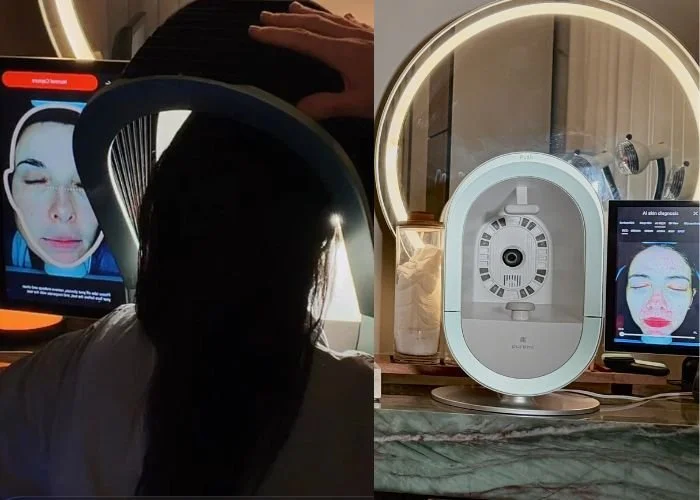
What AI-Assisted Skin Analysis Taught Us About the Oily Skin Myth
One of the clearest examples of how artificial intelligence has changed preventive skincare at Lux MedSpa Brickell involves something most guests believe they already understand about their own face: whether their skin is oily, dry, sensitive or somewhere in between.
We adopted AI-assisted skin analysis more than three years ago, becoming one of the early wellness businesses in Miami to integrate it into the consultation process consistently. What made the technology valuable was never the idea of replacing professional judgment. It was the increased visibility into patterns that were often misunderstood — even by the guests living inside that skin every day.
The Most Common Misdiagnosis We See: Oily Skin That Isn't Oily
The single most frequent pattern AI surfaced in our consultations was a textbook example of why preventive care so often goes sideways without precision diagnostics.
Guests would arrive convinced they had oily skin. The reasoning was reasonable on the surface: their face felt shiny by mid-afternoon, their pores looked enlarged in certain lighting, and they had spent years buying products designed to "control oil" or deliver that squeaky-clean sensation.
But the imaging frequently revealed something different underneath the shine. The skin was dehydrated. The barrier was compromised. And the very routine the guest had built to fix the perceived oiliness was, in many cases, the cause of the symptom they were trying to eliminate.
This pattern is well-established in clinical literature. Many "oily" skin profiles are actually dehydrated-oily, meaning the skin is overproducing sebum to compensate for a damaged moisture barrier — a feedback loop that aggressive cleansers, hot water, and over-exfoliation only intensify.
Without imaging, data layering, and comparative analysis, many of these cases would have continued being treated incorrectly — more stripping, more irritation, more breakouts.
Why AI-Assisted Analysis Changes the Consultation
Traditional skincare consultations rely on visual inspection, a brief intake conversation, and the practitioner's experience. All of that still matters at Lux MedSpa Brickell. None of it is going away. But it has limits, and those limits become especially visible when a guest's self-reported skin type contradicts what is actually happening at the barrier level.
AI-assisted skin imaging adds a layer of objective data — surface texture, sub-surface pigmentation, hydration mapping, pore distribution, redness patterns, and comparative analysis against thousands of prior consultations. A peer-reviewed review in the journal Cosmetics describes how AI in aesthetic dermatology is enabling more personalized, predictive, and proactive care by giving practitioners diagnostic precision that was simply not available a decade ago.
A separate review published in the Journal of Cosmetic Dermatology reached a similar conclusion, noting that AI-powered imaging systems can identify subtle skin characteristics and pigment patterns that meaningfully change how treatments and home-care routines are selected. That research mirrors what we have observed in our own consultations in Brickell: the technology does not deliver a verdict, it delivers a starting point that a trained professional can interpret with far greater accuracy.
Why Personalization Is the Whole Point of Preventive Skincare
The biggest lesson we have learned across thousands of consultations at our location on the 9th floor of SLS LUX Brickell is that preventive skincare becomes dramatically more effective the moment personalization increases.
The same product that calms one guest's barrier will inflame another's. The same treatment cadence that produces glowing skin in one face will create congestion in another. The variables — age, ethnicity, hormonal cycle, Miami's humidity, travel patterns, sleep, sun exposure, prior aesthetic procedures — multiply quickly. AI gives us a way to hold all of those variables in view at once, then translate that data into a routine the guest can actually live with.
That is the difference between selling a facial and practicing clinical-grade skincare. And it is the reason guests increasingly search for the best facialists in Miami rather than simply the most convenient appointment.
The Human Side: Why the Machine Alone Is Never Enough
It is important to be honest about what AI cannot do. It cannot read the tension in a guest's shoulders. It cannot hear the hesitation in someone's voice when they describe a breakout that started before a wedding. It cannot interpret the small, lived details that turn a consultation into actual care.
Our facialists do all of that. One of our lead practitioners is a trained medical assistant, which gives her an unusually deep frame of reference for interpreting AI output alongside what the guest is actually feeling. That combination — clinical literacy plus emotional intelligence plus machine-assisted imaging — is the model we have spent three years refining.
Guests do not want to feel analyzed by a machine. They want to feel understood more accurately. AI helps us do exactly that.
Where Microneedling and Precision Treatments Fit In
Once the imaging gives us a clear picture of barrier health, hydration status, and underlying concerns, treatment selection becomes far more specific. A guest whose AI scan reveals compromised hydration is not a candidate for an aggressive resurfacing session that week. A guest whose scan reveals deeper textural concerns — post-acne scarring, fine lines, uneven tone — is often an excellent candidate for microneedling, which we offer as part of our broader menu of luxury spa services in Brickell.
Microneedling is one of the clearest examples of why precision matters. Performed on the right skin at the right moment, it stimulates collagen and meaningfully improves texture. Performed on a compromised barrier, it can set a guest back weeks. AI-assisted analysis is what tells us, with confidence, which scenario is actually in front of us.
The Lesson After Three Years
Preventive care works when personalization increases. AI is powerful because it helps practitioners recognize subtleties and behavioral patterns at scale — the over-cleansing routine, the seasonal dehydration cycle, the product that quietly disrupted the barrier six months ago. But the technology only works well when it is combined with human interpretation, professional training, and the willingness to slow down and explain what the data actually means.
That is the standard we hold ourselves to at Lux MedSpa Brickell, and it is the reason we continue to invest in both the technology and the people who interpret it.
Frequently Asked Questions
What is AI-assisted skin analysis?
AI-assisted skin analysis combines high-resolution imaging with machine learning to map surface and sub-surface skin conditions — including hydration levels, pigmentation, pore distribution, redness patterns, and barrier health. At Lux MedSpa Brickell, we use it to support the consultation, not replace the facialist's judgment.
How does AI help identify dehydrated skin that looks oily?
Dehydrated-oily skin is one of the most commonly misread profiles. The skin produces excess oil to compensate for a damaged moisture barrier, which guests often interpret as "oily skin." AI imaging measures hydration and barrier integrity directly, allowing us to identify the underlying cause rather than treat only the visible symptom.
Is AI skin analysis safe and non-invasive?
Yes. The imaging is fully non-invasive — no needles, no radiation, no downtime. It is a visual and data-capture process that takes only a few minutes during your consultation.
Does AI replace the facialist?
No. AI provides data; the facialist provides interpretation, context, and care. One of our lead practitioners is a trained medical assistant, and every recommendation is delivered by a human professional who knows your history, your goals, and the realities of your lifestyle in Miami.
Is microneedling appropriate for every guest?
Not always. Microneedling is highly effective for collagen stimulation, texture improvement, and post-acne scarring — but only when the skin barrier is healthy enough to support the treatment. AI-assisted analysis helps us determine whether a guest is ready for microneedling now or whether barrier repair should come first.
How do I book an AI-assisted skin consultation in Brickell?
You can book any custom facial directly through our website. The AI-assisted analysis is included as part of our clinical consultation process at Lux MedSpa Brickell, located on the 9th floor of SLS LUX Brickell at 805 S Miami Ave, Miami.
