

Alan Araujo’s Playbook: Experience Over Ads
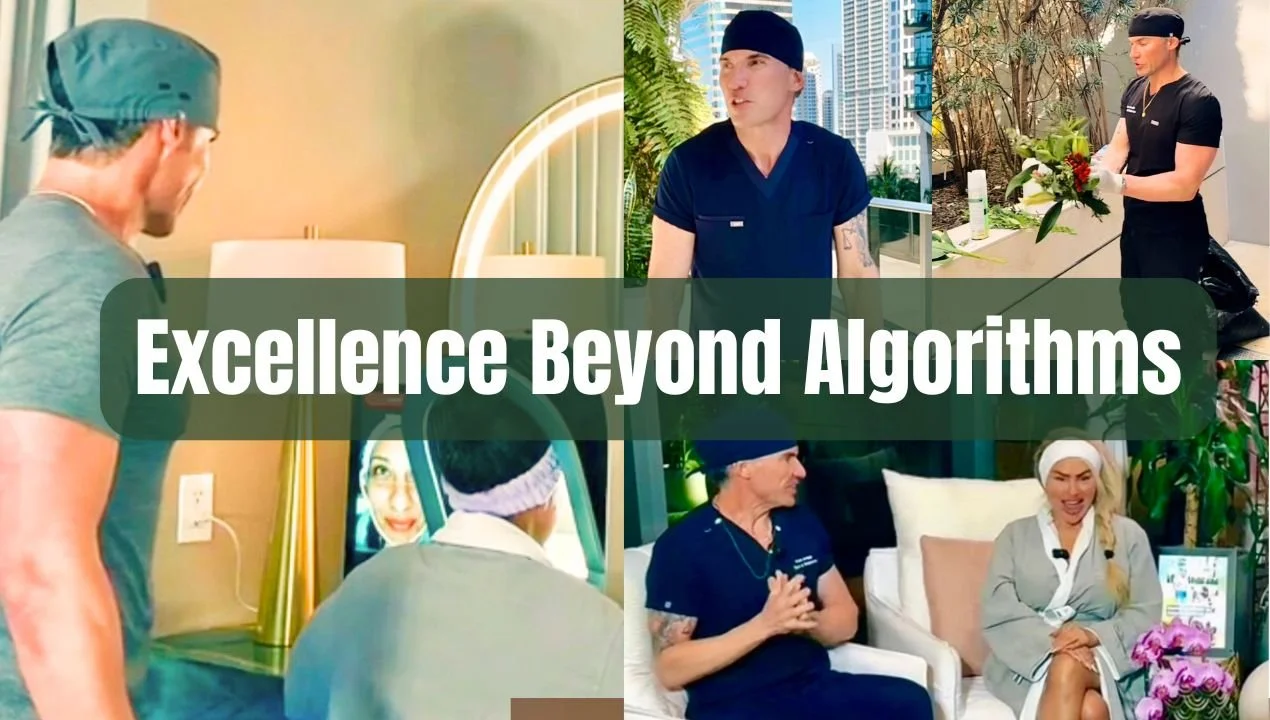
The Founder's Playbook · Alan Araujo
Search is no longer just retrieval. It is decision support. The question has quietly shifted from "which page contains the right keywords?" to something far more human: "which business can be confidently recommended?"
Twenty years ago, visibility was a keyword game. Then it became a question of which page deserved to rank. Today, with AI woven into how people search, it has become a question of trust: which business, of all the options, feels safe to choose? For service businesses, that changes everything. Visibility is no longer only about keywords, backlinks, or ad budgets. It is about clarity, consistency, and answering the guest's real question before they have to ask it.
I'm Alan Araujo, founder of Lux MedSpa Brickell, a luxury hotel day spa inside the SLS LUX Hotel in Miami. Over the years, this philosophy has shaped a brand recognized for more than 2,200 five-star Google reviews and strong organic visibility, built around transparency rather than shortcuts. This is the thinking behind it.
Pillar 1: From Ranking to Recommendation
Traditional SEO focused on ranking. Modern search is moving toward recommendation, and that distinction matters. A page can rank because it contains the right terms. A business earns recommendation when the available evidence makes the choice feel safe, clear, and trustworthy.
Reviews, service descriptions, pricing clarity, operational consistency, photos, staff professionalism, location signals, the booking flow, client outcomes, all of it becomes part of the same trust architecture. This is why experience matters more than ads: ads can create attention, but experience creates evidence.
The goal is no longer to chase the algorithm. The goal is to reduce uncertainty for the guest.
Pillar 2: Transparency Eliminates the Noise
Price matters because it removes confusion, but price alone is not the strategy. Transparency is the real differentiator. Guests should understand what they are booking, what is included, who the service is designed for, how long it lasts, where the spa is located, and what makes one treatment different from another.
When that information is missing, the guest can only compare by price. When it is clear, they can compare value. At Lux MedSpa Brickell, that means explaining not just the massage or facial itself, but the experience around it: the environment, resort-style amenities, the intake process, therapist training, and hospitality standards.
Pillar 3: The Invisible Details That Shape Luxury
Many of the details that define a luxury experience are not the ones guests think to ask about. Most never ask what massage table is used, or about the quality of the oil, the softness of the towels, the sanitation standards, or the training behind a lymphatic drainage protocol.
But they feel the difference. Luxury is built through invisible decisions. The guest may not name each one, but the body recognizes comfort, the skin responds to quality, and the mind notices whether the experience feels calm, organized, and cared for. My operating philosophy is simple: every detail that touches the guest matters, even if the guest never asks about it.
Pillar 4: Reviews as Operational Intelligence
Most businesses treat reviews as social proof. We treat them as intelligence. A five-star review is not only a compliment, it is data. It reveals what guests value, the language they use, the details they remember, and the expectations that were met. A rare critical review usually reveals something equally useful: a gap in clarity or expectation-setting.
So the review strategy becomes operational. The point isn't to collect testimonials, it's to understand what guests are really saying and use it to sharpen service pages, booking descriptions, FAQs, training, and the entire client journey.
Reviews improve the content. Content sets better expectations. Better expectations create better experiences. Better experiences create stronger reviews.
Pillar 5: AI Is Only as Good as the Clarity Behind It
AI is powerful, but it is not magic. It becomes useful when the business gives it accurate information, clear constraints, and a structured system to work from. That's why I separate the work across specialized tools, each with a defined role rather than asking one tool to do everything.
The better question is never "which AI is best?" It is "what role should each tool play inside the business system?" When AI is fed messy information, it produces messy output. When it is guided by accurate data, brand clarity, service structure, and real constraints, it becomes a force multiplier, not a replacement for judgment.
Pillar 6: The Founder's Mindset
Underneath all of it sits a simpler belief: commitment and consistency compound. Succeeding isn't luck. It's showing up every day and refusing to lower the standard when no one is watching. Excellence can't be switched on when opportunity arrives, it has to already live in the culture.
But succeeding and being successful are not the same thing. To succeed is to hit a measurable outcome. To be successful is to know the work reflects your values and contributes to something larger than yourself. That kind of success takes patience, and in business the most important question isn't "how long will this take?" It's a harder one:
"How long can you hold your breath?"
Most people stop just before the work begins to change. The difficulty is that no one knows exactly when that turning point will arrive, which is precisely where conviction matters. People see a flawless execution and assume it was easy. The truth is the opposite: the more flawless it looks, the more it signifies hard work, perseverance, and mastery.
Keep going. The moment you convince yourself you've already lost and stop moving forward, you make that outcome permanent.
Pillar 7: Resilience as Brand DNA
Behind the calm of a spa is a path that was never linear. My first taste of entrepreneurship was as a child selling candy in Brazil, and those early lessons weren't only about margins, they planted a lifetime of self-reliance. Immigrating to the United States brought cultural barriers and skepticism, and every obstacle sharpened the resolve. I moved from studying law to real estate and, finally, into wellness, carving out a space where hospitality meets visible results.
That resilience, built through personal trials and professional pivots, is what gives the brand its authenticity. The ability to pivot and persevere is the invisible ingredient, proof that the quality of a service is a direct reflection of the character behind it. My grandfather taught me never to outsource my own judgment, and that lesson still anchors everything I build.
The Real Blueprint
The blueprint isn't to publish more content for its own sake. It's to build one connected system where every page, review response, booking description, FAQ, photo, and operational detail supports the same truth. For Lux MedSpa Brickell, that truth is clear: luxury wellness isn't defined by decoration. It's defined by trust, hospitality, personalization, and the invisible details that make a guest feel cared for before, during, and after the service.
That is why the future of search belongs to businesses that can be confidently recommended.
Experience creates evidence. Evidence creates trust. Trust creates the recommendation.
Frequently Asked Questions
What does "experience over ads" actually mean?
Ads can buy attention, but they can't manufacture trust. In a high-touch service business, the guest eventually meets the reality behind the marketing. If the experience is weak, advertising only accelerates disappointment. If it's strong, every guest becomes a potential advocate, so we invest in the experience first and let guests describe it in their own words.
Why do you say search has become "decision support"?
Search used to be about finding pages that contained the right keywords. Now, with AI woven into the experience, it increasingly helps people decide which business can be trusted, based on clarity, consistency, reviews, and evidence. The winning question shifted from "which page ranks?" to "which business can be confidently recommended?"
How do you use client reviews beyond social proof?
I treat reviews as operational intelligence. They reveal the exact language guests use, the details they remember, and the expectations that were met or missed. That insight feeds directly back into service pages, booking descriptions, FAQs, and staff training, so the content sets better expectations, which in turn creates better experiences and stronger reviews.
What's your philosophy on using AI in a service business?
AI is a force multiplier, not a replacement for judgment. It's only as good as the data, clarity, and constraints behind it. I give each tool a defined role rather than asking one to do everything, and I feed it accurate information and clear guardrails. Messy inputs produce messy output; structured inputs produce something genuinely useful.
What's the difference between succeeding and being successful?
To succeed is to hit a measurable outcome. To be successful is to know the work reflects your values and contributes to something larger than yourself. The first is a result; the second is a way of living the work. That's why patience matters, and why the real question in business is "how long can you hold your breath?" — most people stop just before the work begins to change.
Building something with the same philosophy? Explore the work, or reach out, I'm always glad to talk with people building brands that endure.
