

Niacinamide for Skin: Benefits & How to Use It Guide.
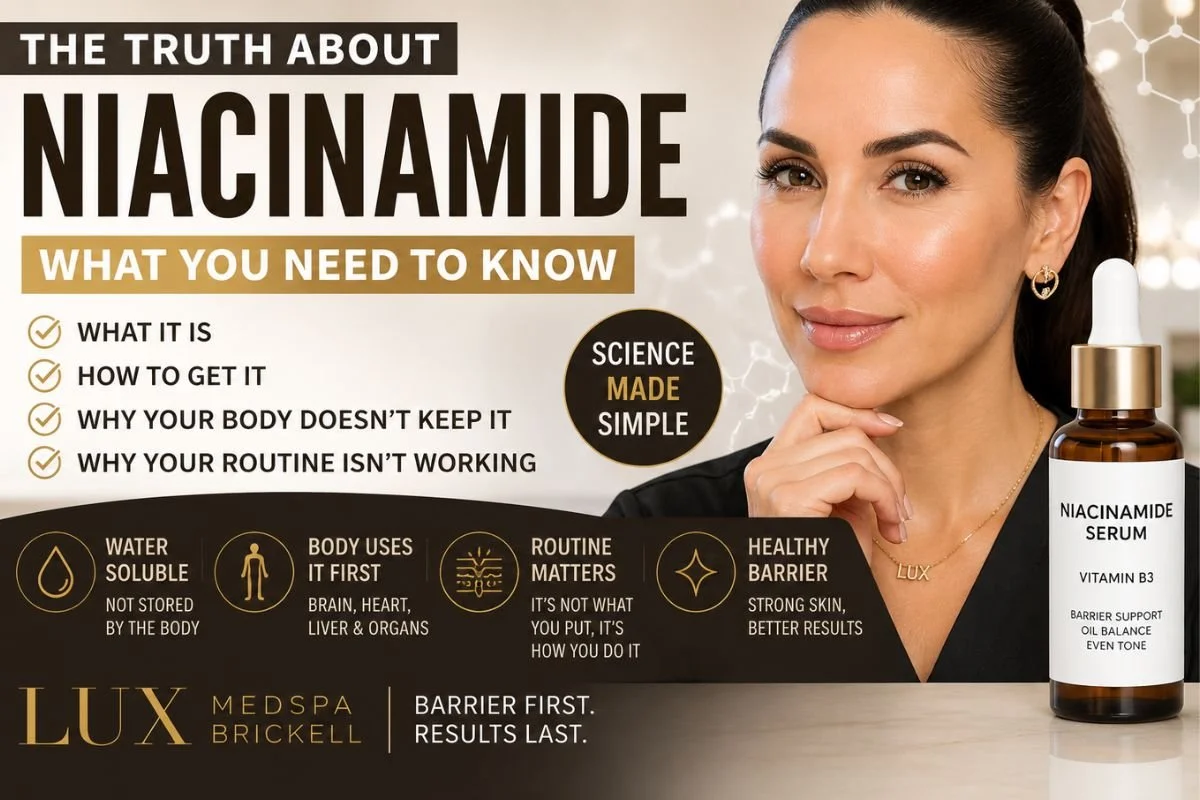
Healthy Skin Begins Before the Serum Touches Your Face.
Niacinamide is one of the most talked-about skincare ingredients right now. But glowing skin does not come from chasing one trending serum. It comes from building a healthy skin barrier, preparing the skin correctly, and using active ingredients in the right order.
Beyond the Hype: Why Niacinamide Works
Niacinamide, also known as vitamin B3, supports the skin in multiple ways. It helps improve the appearance of uneven tone, visible redness, excess shine, fine lines, and a weakened skin barrier. It is not a sunscreen, a replacement for cleansing, or a magic shortcut. It is more powerful when the skin is properly cleansed, balanced, and ready to receive it.
The Factory Manager
Collagen is the structure. Niacinamide is the manager helping the skin operate with better balance, less visible stress, and stronger barrier function.
The Cellular Battery
Niacinamide supports NAD-related pathways that help the skin maintain energy for repair, renewal, and daily defense.
The Barrier Supporter
When the skin barrier is healthier, the skin looks calmer, smoother, more hydrated, and more consistent over time.
The Routine Matters More Than the Trend
Many people do not have a skincare routine. They have a product. That is why results go up and down. If the skin is covered with sunscreen residue, pollution, excess oil, makeup, or heavy silicones, even a beautiful active ingredient may not perform well.
Start With an Oil-Based Cleanser
Oil attracts oil. A lipophilic cleanser helps dissolve sunscreen, sebum, pollution, and daily buildup without aggressively stripping the skin barrier.
Follow With Skin Preparation
After cleansing, use a toner or balancing step to prepare the skin. This helps create a cleaner pathway before applying active ingredients.
Apply Niacinamide With Intention
Niacinamide works beautifully when layered into a routine designed for barrier health, oil balance, visible redness, and uneven tone.
Protect During the Day, Rebuild at Night
During the day, pair barrier support with sunscreen. At night, niacinamide can pair well with retinoids when the skin is ready and not over-exfoliated.

Support Your Skin From the Inside Out
Beautiful skin does not begin with skincare alone. Niacinamide is a form of vitamin B3, an essential nutrient your entire body depends on, not only your skin. Your brain, heart, liver, muscles, digestive system, and every cell in your body rely on vitamin B3 to help support energy production through NAD and NADP pathways.
Unlike vitamins A, D, E, and K, which are fat-soluble and can be stored for later use, vitamin B3 is water-soluble. Your body does not keep large emergency reserves, which is why consistent intake through a balanced diet matters.
A healthy diet supports healthy skin. Professional skincare supports healthy-looking skin. Together, they create the best environment for long-term skin health.
At LUX MedSpa Brickell, we believe professional treatments and high-quality skincare, including the clinical formulations from Cosmedix, work best when they are part of a comprehensive approach that includes proper nutrition, barrier support, intelligent cleansing, and consistent daily habits.
Dietary Niacinamide: Vitamin B3 Food Sources
Ranked by nutrient density, bioavailability, and standard human portion sizes. Biological preformed sources support direct NAD and NADP pathways.
8 Science-Backed Truths About Niacinamide
1. Niacinamide Supports the Skin Barrier
A strong barrier helps the skin hold hydration, tolerate actives better, and look calmer. When the barrier is compromised, the skin may appear red, rough, oily, dry, or reactive at the same time.
2. Pores Do Not Shrink, They Look More Refined
Pore size is influenced by genetics. The better explanation is the jacket pocket analogy: when the pocket is stuffed, it looks stretched. When oil and debris are reduced, the pore can look flatter and more refined.
3. Oil Balance Is Not the Same as Drying the Skin
Harsh cleansing can trigger more imbalance. Niacinamide helps support a more balanced-looking complexion without the aggressive stripping that can weaken the barrier.
4. Uneven Tone Requires Consistency
Niacinamide may help improve the appearance of uneven tone over time, especially when combined with sunscreen, gentle exfoliation, and professional guidance.
5. Niacinamide Can Pair Well With Retinoids
Retinoids ask the skin to renew. Niacinamide helps support the skin barrier and may improve tolerability when the routine is introduced gradually and correctly.
6. The Product Matters, But the Order Matters Too
A beautiful active ingredient cannot perform well on poorly cleansed, irritated, or over-exfoliated skin. Preparation is part of the treatment.
The Cosmedix Connection
At LUX MedSpa Brickell, we focus on clean, clinical, luxury skincare and intentional product layering. These Cosmedix products can support a niacinamide-centered conversation depending on the client’s skin condition and professional recommendation.
Surface Revival
An antioxidant boosting toner featuring niacinamide, designed to support smoother-looking tone and texture while helping prepare the skin after cleansing.
Shineless
An oil-free moisturizer designed for oily and blemish-prone skin, helping reduce the appearance of shine while supporting hydration and balance.
Cell ID
A restorative serum focused on visible signs of aging, fine lines, hyperpigmentation, and compromised barrier support. This is ideal for the “repair and restore” conversation.
Clarity
A skin-clarifying option for congestion-prone skin. Use this in consultation only after reviewing the full routine, because active products should support the barrier, not overwhelm it.
The Day and Night Strategy
Morning
Cleanse, prepare, apply barrier-supporting ingredients, moisturize, and finish with sunscreen. Niacinamide supports the skin, but sunscreen protects it.
Evening
Use an oil-based cleanser to remove sunscreen, pollution, and buildup. Then apply treatment products according to the skin’s tolerance.
Long-Term
The skin responds best to consistent habits. One product can help, but a well-designed routine creates more stable, visible results.
Niacinamide FAQs
What is niacinamide?
Niacinamide is a form of vitamin B3 widely used in skincare because it helps support the skin barrier, improve the appearance of uneven skin tone, reduce visible redness, balance excess oil, and support healthier-looking skin.
Many people think niacinamide is simply another skincare ingredient. In reality, it is much more than that. Niacinamide is not collagen, a protein, or a peptide. It is a precursor to the coenzymes NAD+ and NADP+, which help skin cells produce and use energy for many of their normal biological functions.
Think of niacinamide as a facilitator rather than a builder. It doesn't replace your skin's natural processes or force the skin to behave differently. Instead, it supports the biological pathways your skin already uses every day to maintain a healthy barrier, regulate oil production, respond to environmental stress, and recover from daily damage.
As we age, many of these natural cellular processes become less efficient. Niacinamide helps support those processes, which is one reason it has become one of the most researched and respected ingredients in modern skincare.
Healthy skin isn't created by adding more products. Healthy skin is created by supporting the biology of your skin. That philosophy is the foundation of my Barrier First approach to skincare.
Can niacinamide shrink pores?
No topical product can permanently shrink genetically determined pore size. Niacinamide can help pores look more refined by supporting oil balance and reducing the appearance of congestion.
Should I use niacinamide before or after toner?
In most routines, cleanse first, then use toner or essence, then apply niacinamide serum or treatment, followed by moisturizer and sunscreen during the day.
Can I use niacinamide with retinol?
Yes, many people tolerate niacinamide well with retinol. Niacinamide can support the barrier, while retinol supports renewal. Introduce gradually and avoid over-exfoliating.
Does niacinamide replace sunscreen?
No. Niacinamide can support the skin against visible environmental stress, but it does not block UV rays. Daily sunscreen is still essential.
Why is cleansing so important before niacinamide?
During the day, the skin collects sunscreen, oil, pollution, and impurities. If those are not removed correctly, treatment products may not layer or absorb as well.
Is niacinamide good for oily skin?
Niacinamide is often used in routines for oily or combination skin because it supports a more balanced-looking complexion without aggressive stripping.
What exactly is niacinamide?
Niacinamide is a form of vitamin B3. It is not a protein, collagen, peptide, or fiber. More precisely, niacinamide is a precursor to the coenzymes NAD+ and NADP+, which help skin cells produce and use energy.
Think of niacinamide as a facilitator. It does not force the skin to change. It supports the cellular processes that help the skin maintain barrier function, regulate visible oiliness, respond to environmental stress, and look healthier over time.
Why does niacinamide matter more as we age?
As we age, cellular turnover and repair processes can become slower. That is one reason skin may look dull, uneven, tired, or less resilient.
Niacinamide supports the skin at a cellular level by helping fuel pathways connected to repair, barrier support, and energy use. In simple terms, it helps the skin work more efficiently instead of simply covering the surface.
How can I tell if a niacinamide product is worth considering?
Start by reading the ingredient list, not only the front label. If a product promotes niacinamide as the hero ingredient but niacinamide appears near the very bottom of the ingredient list, it is reasonable to be skeptical.
That does not automatically mean the product is bad, because the full formula matters. But it does mean you should look closer, especially if your skin is sensitive, oily, acne-prone, or barrier-compromised.
A practical tip is to take a photo of the front and back of the product and use ChatGPT or Gemini to help break down the ingredient list. Ask it to analyze the product using a clean, clinical, barrier-first approach. AI can help explain the formula, but a qualified skincare professional can help determine whether it fits your skin..
Does niacinamide reinforce the skin barrier?
Yes. One of the most well-studied benefits of niacinamide is its ability to support and strengthen the skin barrier. Rather than acting like a temporary cosmetic fix, niacinamide helps the skin improve its own barrier function by supporting the production of essential lipids, including ceramides, which help reduce moisture loss and protect the skin from environmental stressors.
Think of your skin barrier as the walls of your home. If the walls are damaged, it doesn't matter how beautiful the furniture is inside. The structure itself needs attention first.
This is why I teach a Barrier First approach to skincare. Before introducing powerful active ingredients, your skin should be properly cleansed, supported, and prepared. A healthier barrier allows ingredients such as niacinamide, retinoids, antioxidants, and peptides to perform more effectively while reducing the likelihood of unnecessary irritation.
Healthy skin is rarely the result of one ingredient. It is the result of consistent habits that protect and reinforce the skin barrier every day.
Is niacinamide good for sensitive skin?
Niacinamide is generally well tolerated, but sensitive or compromised skin should introduce active ingredients slowly and with professional guidance.
What is the best facial for niacinamide and barrier support in Miami?
A customized facial at LUX MedSpa Brickell can help evaluate your skin barrier, cleansing routine, congestion, sensitivity, and product layering before recommending a personalized home routine.
Book a Custom Facial in Brickell
If your skin feels oily, dull, sensitive, congested, or inconsistent, the first step is not adding more products. The first step is understanding your barrier, your cleansing routine, and how your products are being layered.
